

Goldman Sachs: Oil flows will only recover to 70% of pre-war levels
Iran emerged from the war with the US and Israel bleeding, but it did not kneel. It may have lost its Supreme Leader, Ali Khamenei, seen the heart of its power struck, and watched its doctrine of strategic immunity collapse, but it endured—it did not shatter. Instead, it maintained control, forced its opponents into negotiations, and attempted to turn a military crisis into political survival. Analysts point out that the question now is not who won the war, but what happens from here on, as wars are judged not only by who survives, but by what remains after the destruction. As they report, the real challenge for the Tehran regime now begins against its primary judge: the Iranian citizens. Among the first challenges and a key priority is the opening of the Strait of Hormuz, with many warning that this is where absolute chaos begins.
The real question for Hormuz
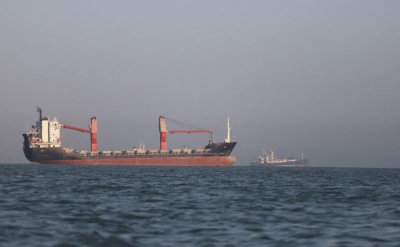
Ever since Iran closed the Strait of Hormuz in early March, there have been so many contradictory announcements that no one knew whether passage through this critical maritime waterway was a clever move or a reckless gamble. Following the signing of the US–Iran memorandum, President Trump issued a series of statements, the most characteristic being: "Ships of the world, start your engines." However, as Foreign Policy notes in its analysis, starting a ship's engine is, unfortunately, the easiest part of the process (and the engines had never really stopped). The real question is how all the trapped vessels will safely and orderly exit the Persian Gulf — and what will happen if some do not make it. Although the memorandum was signed by US President Trump and Iranian President Pezeshkian, and the first negotiations between the two sides are expected to begin in Switzerland tomorrow, Friday, June 19, analysts argue that any ships attempting to cross Hormuz will be moving through a blurry legal and regulatory landscape.
A limited procession
A few hours after the announcement of the agreement, some ships proceeded to cross. "Ships are starting to move," Trump wrote. "They are using the southern 'highway,' which is perfectly safe, protected, and clear," Trump claimed, referring to the shipping route that passes through the territorial waters of Oman. However, ship-tracking websites showed only a limited procession with few oil tankers. Most ships, as expected, were waiting for the formal signing of the ceasefire agreement. Until then, many questions remain unanswered, including whether the signing of the memorandum will indeed lead to the opening of the Strait.
"Within 30 days"
After arriving in France for the G7 summit, Trump stated that the Strait would be "fully open" on Friday, June 19. However, the Iranian news agency Mehr reported that, according to the 14-point plan agreed upon between the US and Iran, Hormuz will not open on June 19 but "within 30 days, based on Iranian regulations." Although some ships have passed safely in recent days, the uncertainty is such that their success does not guarantee a similar fate for other vessels. There is also the risk of a new ignition.
Fierce competition, how will they leave?
If the ceasefire between the US and Iran holds and most ships want to depart, the first issue is the order in which they will do so. Given that the ceasefire lasts only 60 days, intense competition is expected to secure passage slots. "Commercial pressures may also influence decisions," said Svein Ringbakken, CEO of the war risk marine insurance company DNK. "Oil, gas, and petroleum products exported early offer significant profit opportunities. Fertilizers have great value if delivered before the planting season, but may lose value after this period ends."
Who is responsible?
Who is responsible for determining the order of the naval procession? No one knows. "Iran claims this is its jurisdiction, while the United States says everyone is free to leave," stated Joshua Hutchinson, commercial director of the maritime security firm Ambrey.
600 ships trapped
Indeed, some of the approximately 600 ships remaining trapped in the Gulf may not manage to depart within the 60-day window. If the ceasefire is not followed by a permanent peace treaty, they might face an even longer and more painful wait.
The 2 routes
There is also the question of the route. The traffic separation system managed jointly by Iran and Oman ceased to function with the outbreak of the war. Since then, the few ships that passed used either the northern route along the Iranian coast or the southern route along the coast of Oman. These two parallel systems essentially turned a two-lane road into a four-lane road. "I believe the southern route, which has been protected by the Americans until today, will be popular, but it is difficult to move a large number of ships in both directions," Ringbakken said. "This route can handle just 10% of the usual traffic of the Strait."
The risk of mines
Other ships, especially those connected to Iran-friendly countries or carrying Iranian oil, will use the northern route, which is now controlled by Iran's new Persian Gulf Strait Authority. However, as Ringbakken noted, "this is essentially not an option for Western ships under the current sanctions regime." The reason is that Western sanctions prohibit payments to Iranian authorities. Any shipowner considering passage must also worry about mines. It remains unclear if Iran knows exactly where the mines it placed in the Strait are located and if it has the necessary equipment for their rapid removal. "If the Iranians do not disclose where the mines are, provided they can do so, and if there is no cleared route, then the first transits will be dominated by operators with a higher tolerance for risk," Ringbakken said. "The rest will follow only when it is proven that the route is safe." Already, Germany has expressed its intention to send two ships to help clear the area of mines.
Goldman Sachs: Oil flows will only recover to 70% of pre-war levels
Oil flows through the Strait of Hormuz may only recover to 70% of their pre-war levels, according to Goldman Sachs, as Gulf countries accelerate their shift toward alternative routes and infrastructure that bypasses the critical maritime waterway.
The "new 100%" and the Goldman Sachs estimate
In a note dated June 17 titled "70% of pre-war Hormuz flows may become the new 100%," Goldman Sachs analysts, including Julia Zestkova Grigsby, estimate that a full "normalization" of Gulf exports to pre-war levels would require an increase of about 13 million barrels per day in flows through Hormuz from current levels. The same analysis predicts that the increase in shipments may be completed by the end of next month, while total Gulf production will likely have recovered by October, according to Bloomberg.
Pre-war levels and strategic importance
Before the conflict, about 20 million barrels of oil and petroleum products passed through the Strait daily, according to the International Energy Agency (IEA). The global oil market is now closely monitoring developments in the passage connecting the Persian Gulf to international markets, especially after the US–Iran agreement to end the war and the gradual opening of navigation.
From blockade to "parallel arteries"
During the conflict, flows through Hormuz were nearly zeroed out, as tension and navigation restrictions led to a de facto double blockade that severely impacted oil transport. Prices initially soared before subsequently falling. During the same period, Gulf producers stepped up the use of alternative routes to maintain their exports. Saudi Aramco increased the use of a pipeline that crosses the country and ends in the Red Sea. The United Arab Emirates utilized the pipeline to the port of Fujairah, outside Hormuz, while Iraq channeled exports to the Turkish port of Ceyhan.
Current flows and "shadow" crossings
According to Goldman Sachs, visible flows through Hormuz currently amount to about 1.3 million barrels per day, while an additional 1.6 million barrels from the Gulf of Oman may fall under so-called "dark crossings," where monitoring is limited. Meanwhile, about 7.5 million barrels per day are directed through alternative export hubs of the Red Sea and the Indian Ocean, such as Yanbu, Fujairah, and Ceyhan, according to the same analysis.
Shipping is no longer a limiting factor
Available ship capacity is not considered a barrier to the recovery of flows. Analysts estimate there are about 860 million barrels of available transport capacity in empty tankers, either within the strait or within five days of sailing distance. However, uncertainty remains, as some shipowners continue to avoid passage through the area due to risk.
The strategic disengagement of the UAE
This month, the United Arab Emirates announced a plan to gradually reduce dependence on Hormuz through the expansion of the eastern ports of Dibba, Fujairah, and Khor Fakkan, as well as the construction of new facilities in the Gulf of Oman. UAE Minister of Foreign Trade, Thani Al Zeyoudi, stated: "We are moving toward zeroing our dependence on Hormuz, regardless of whether it is open or not. It will open and we hope soon, but we will not stop the new plan."
Wrong question
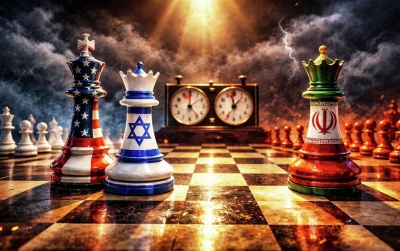
It is obvious that after the signing of the US–Iran memorandum, the question arises: who won the war? But that is also the wrong question. Iran did not defeat the United States and Israel, nor did the Islamic Republic collapse under military pressure. Iran did achieve something substantial: after absorbing an extremely fierce attack, it forced the United States to negotiate the economic and naval pressure it could still exert. But this does not equate to victory. This is the negotiating position of a wounded state that retained enough deterrent and destabilizing power to prevent its opponents from unilaterally imposing their terms.
The most important success
Iran's most significant success was on the domestic front. It lost its Supreme Leader, Ali Khamenei, to an Israeli strike. It suffered attacks within its territory, damage to strategic assets, and the humiliation of seeing a leader who embodied the system for more than three decades killed in Tehran. However, the regime did not lose control of the country. Security mechanisms remained solid, no decisive split appeared in the ruling elite, and the state quickly installed Mojtaba Khamenei as his father's successor. Mojtaba Khamenei had long been considered a likely successor and had developed close ties with the Revolutionary Guards, who reportedly pressured hesitant clerics to approve his leadership after his father's death.
Misleading
As Foreign Policy points out, it is therefore misleading to present his rise as a product of the war or as proof that military pressure suddenly radicalized an otherwise more flexible regime. The war accelerated the succession; it did not create the successor. More broadly, it did not hand power to Iran's hardliners. It simply revealed how decisively they already possessed it. That is why claims that the war radicalized Iran are not convincing. The supposed moderates of the Islamic Republic had stopped defining its strategic direction long before the first strike. Iran’s confrontation with Israel and the United States did not arise from the sudden rise of some previously excluded extreme faction. It was the culmination of decisions made by the core of the system: the office of the Supreme Leader, the Revolutionary Guards, and the broader security network. Officials usually described as pragmatists could warn against dangerous policies, negotiate tactical retreats, or manage their consequences. They could no longer prevent them.
The strength of the regime
However, the continuity of the regime should not be confused with its strength. The appointment of Mojtaba Khamenei ensured institutional survival but simultaneously highlighted the shrinkage of the Islamic Republic. A system founded in opposition to hereditary monarchy responded to the murder of its leader by transferring power to his son, under the apparent aegis of the Revolutionary Guards. What looked like resilience externally might be interpreted internally as something less flattering: the transformation of a revolutionary republic into a protected family and para-state security enterprise.
What Iran lost
Iran also lost one of the key elements of its regional strategy: the assumption that war could remain far from Iranian territory. For decades, Tehran invested significantly in Hezbollah, Iraqi militias, Houthis, and other armed allies, partly to make a direct attack against Iran prohibitively expensive. The goal was not only the threat to Israel, American forces, and Arab neighbors; it was also the creation of strategic depth behind which Iran itself would remain protected. That protection has now collapsed. Iran was subjected to a direct and deep attack. Its leader was killed. Its military and political infrastructure proved… vulnerable. For a regime that justified massive regional spending as the price for keeping war away from its borders, this constitutes a serious strategic failure.
Extreme pressure
The Strait of Hormuz demonstrated both Iran's remaining power and its limits. Tehran did not suddenly discover this tool during the war; the threat to navigation had always existed. What changed was its willingness, under extreme pressure, to use it on a scale capable of disrupting global energy supplies. In doing so, Iran showed that even a wounded regime could cause significant costs far beyond its borders. However, Hormuz was not a victory without cost. Limiting transit through the Strait intensified Iran's international isolation, harmed the interests of neighboring states, and offered the United States a justification for its own blockade of Iranian ports.
Now the challenge
But now comes the biggest challenge… Lifting sanctions, if it becomes part of a final agreement, could provide a short-term boost to the Iranian economy. Higher oil exports, access to frozen assets, and easier trade could stabilize the currency, improve public finances, and allow the new leadership to present itself as a force that secured economic relief without backing down. For a regime emerging from war and a succession process, this vital time matters. But relief is also politically dangerous. Sanctions have long functioned for the Islamic Republic as something more than an economic burden: they are the most convenient explanation for its failures.
The "ally" people
They allow the rulers to blame foreign enemies for inflation, unemployment, declining living standards, and the general degradation of daily life. Sanctions certainly harmed Iran. At the same time, however, they helped conceal the damage caused by the regime itself: corruption, the clientelist system, opaque foundations, businesses linked to the Revolutionary Guards, waste of resources, and an economy organized around political loyalty rather than public welfare. A post-war Iranian government will thus find itself facing a delicate contradiction. It must create enough visible economic improvement to reassure an exhausted society, reward its supporters, and fund the institutions that protect it. At the same time, however, it must avoid raising expectations so quickly that citizens start asking why the lifting of sanctions did not translate into real prosperity. When the external excuse weakens, accountability shifts inward.
The questions
Iranians may start asking not what Washington did to their economy, but what their own leaders did with the country's wealth. War generates fear, patriotism… But when the bombs stop falling, when the patriotic emergency subsides, and economic promises collide with the reality of a corrupt political order, old grievances may return with even greater intensity. Iran, therefore, exited the war with neither victory nor defeat. It lost its old leader, yet retained control of the country, saved the regime, and proved it possesses enough coercive and economic influence to force negotiations. However, survival simply postponed the deeper reckoning. The next challenge for the Islamic Republic is no longer just to endure the pressure of the United States and Israel. It is to convince its own citizens that, after all the bloodshed, sacrifices, and promised relief, the same system that led Iran to disaster can somehow be considered reliable to rebuild it. This may prove a harder task than surviving the war itself…
www.bankingnews.gr






Σχόλια αναγνωστών